The unfathomable vast expanse of the universe is filled with millions and billions of hidden treasures, mostly in the form of galaxies , gas clouds called nebula, and many other
Since my first days of being an amateur astronomer back in school, I’ve always used telescopes with Altazimuth or Dobsonian mounts – meaning they can go up down (Altitude) and left right (Azimuth), which is very simple to operate but difficult to locate and track sky objects, especially the faint ones like the 110 Messier objects catalogued by Charles Messier in the 18th century or the new NGC catalogue with 7840 deep sky objects
With such a simple altazimuth mounts, a technique called star hopping is the best technique to use to guess and locate a faint object using a wide fov lens. It needs a lot of luck, patience and experience to reach a faint object.
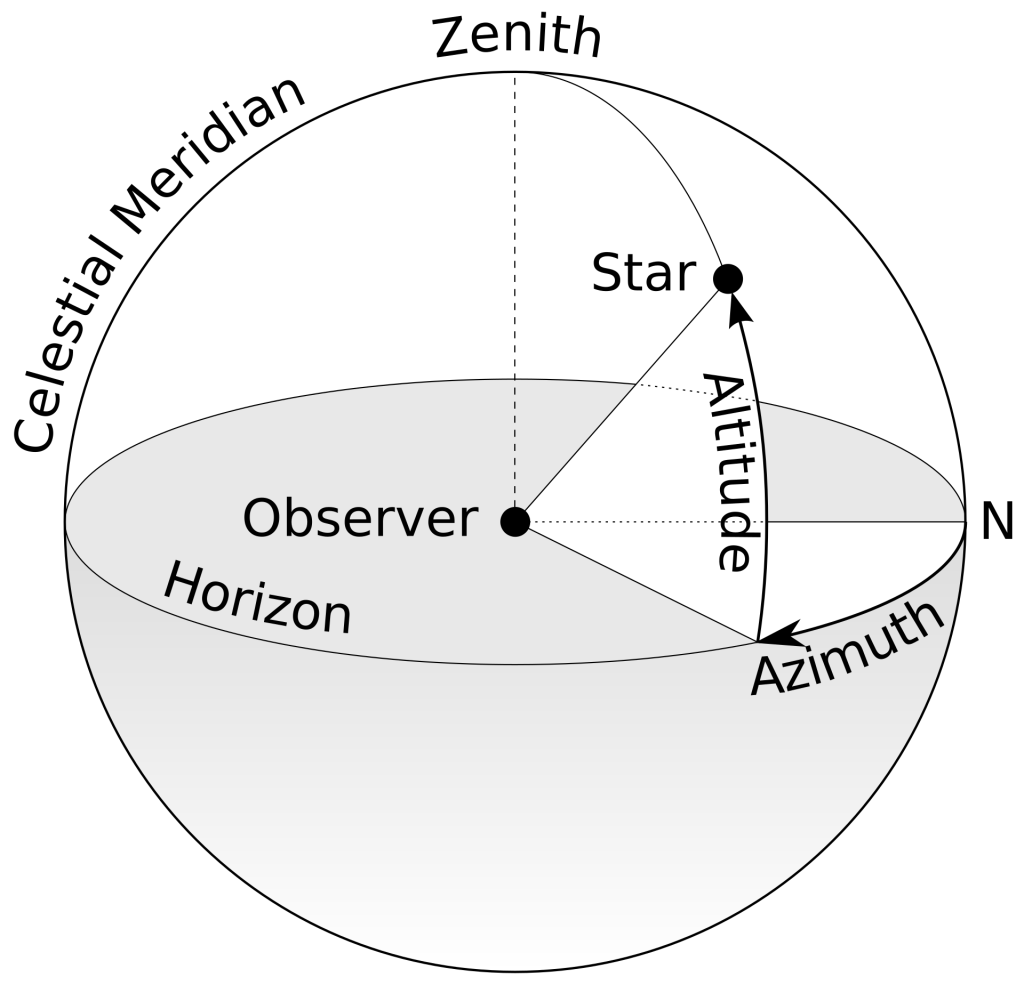
However, sweeping is not a very productive technique to quickly locate deep sky objects. Even if we are lucky and find an elusive deep sky object, keeping it within the narrow field of view of a telescope requires more jugglery of sweeping ever so slightly up and across to keep up with the object moving out of the field of view. This is tricky as the celestial sphere rotates along the imaginary polar axis of the Earth, depending on the latitude at the location of the observer. For example in Mumbai which has a latitude of appx 19 degrees, the skies spin around this imaginary polar axis at a 20 degree tilt.
And luckily the North Celestial Pole also has a star almost at that point – the “Pole Star” – Polaris in the constellation of Ursa Minor (The little bear)
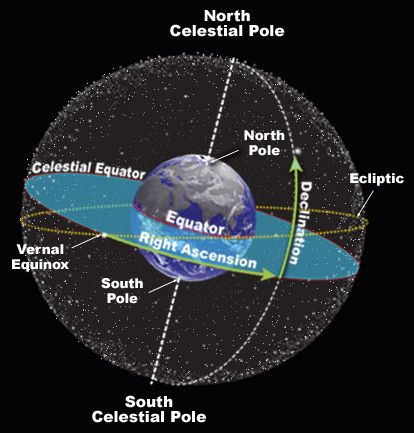
The celestial dome with stars , planets and the all the universe rotates around this celestial polar axis.

The sky dome has been scientifically mapped using coordinate systems just like the earth is mapped using latitude and longitude. Likewise to the Earth equator, there is also a celestial equator.
Right Ascension (in hours, minutes and seconds) is equivalent to longitude and Declination (in degrees, arcminutes and arcseconds ) is equivalent to latitude.
The task of navigating the celestial dome becomes much simpler by using such a scientific measuring system, one which can be replicated , referenced and shared to pinpoint an exact dot in the skies across both the Northern and Southern hemispheres.
The concept of this coordinate system slowly evolved over several centuries since ancient times as ancient astronomers needed to document and record the movement of the stars and planets.
The modern system was formally adopted in the 18th century.
With the invention of the lens refractor telescope by Hans Lippershey in 1608 and subsequently, by Galileo, an improved version for Astronomy observations a year later and then the mirror based reflector telescope by Newton in 1668, the race for making larger telescopes and observatories began.
After the telescope’s invention, the first dedicated, modern research observatories funded by governments emerged in Europe. The Paris Observatory, founded by King Louis XIV, opened in 1667. It was quickly followed by the Royal Observatory, Greenwich in England, established by King Charles II in 1675.
Attribution - The First Observatories
These large telescopes needed a guidance and tracking mechanism to navigate the celestial dome using the R.A. and DEC coordinate system, and continuously tracking the object in the telescope for long periods of time .
The solution was a German optician’s invention – The Equatorial mount. The German equatorial mount was invented in 1824 by German optician and physicist Joseph von Fraunhofer for the famous Great Dorpat Refractor.
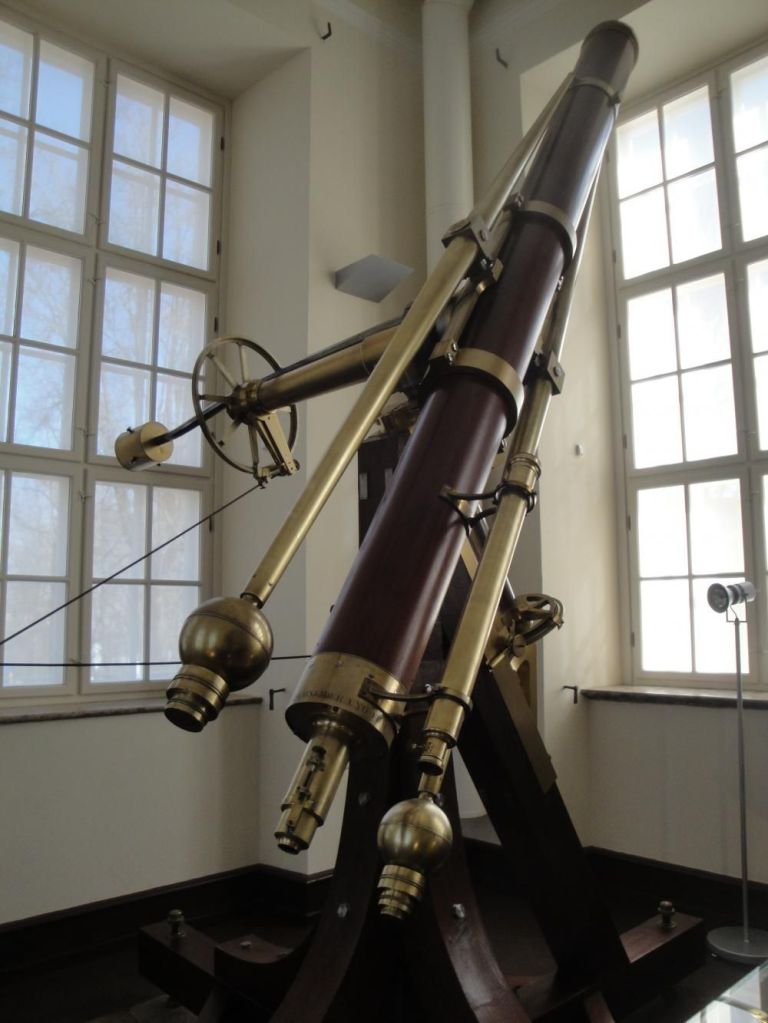
The design allowed astronomers to track celestial objects smoothly along a single axis (the polar axis) parallel to Earth’s rotation, compensating for our planet’s spin.
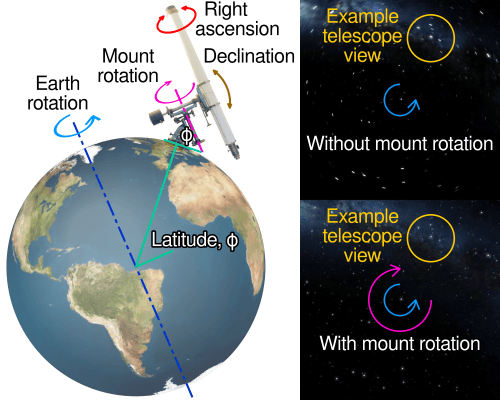
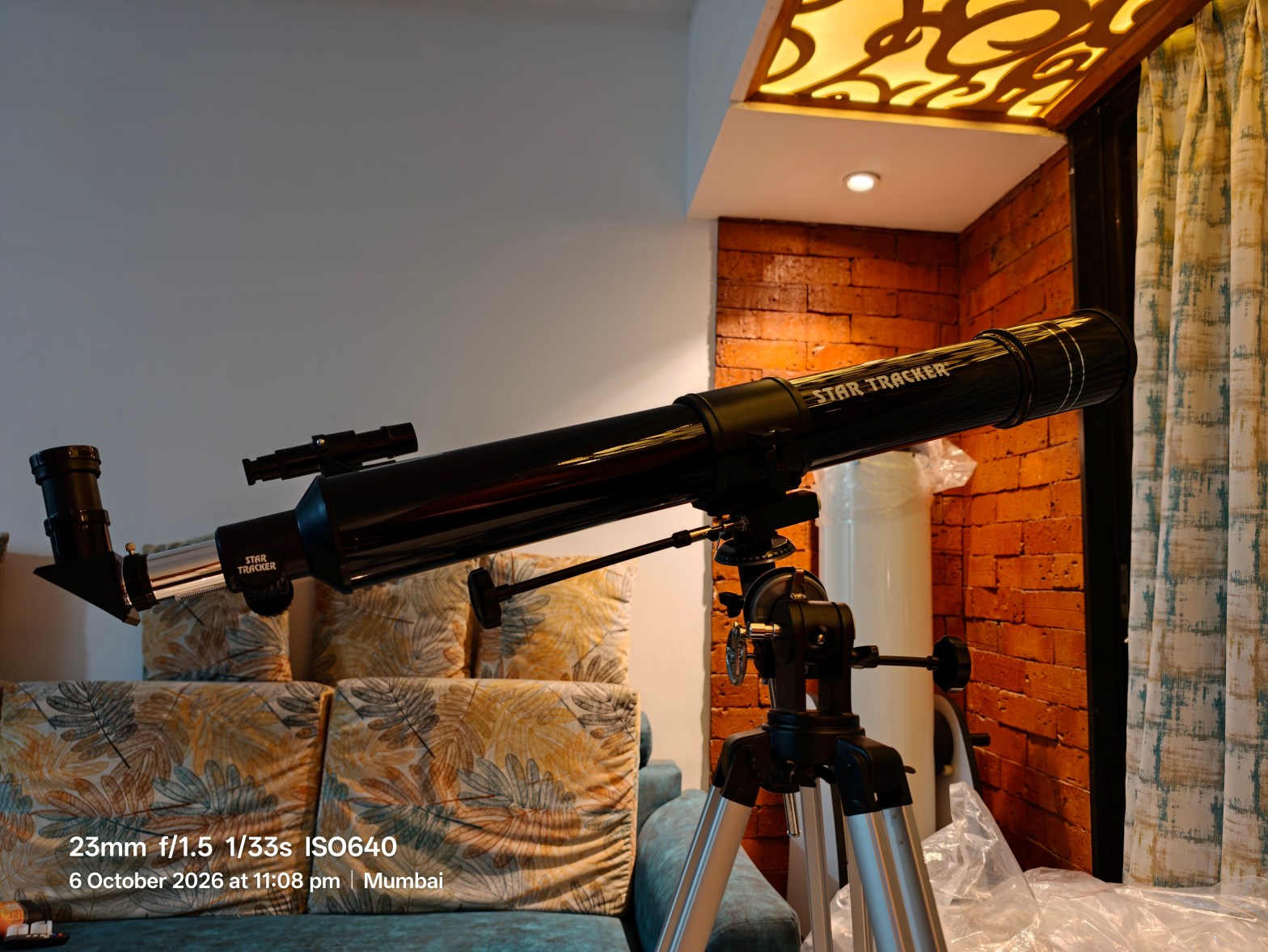
Finally a few weeks back I got my first equatorial mount based telescope.
A Tejraj and Company House Brand “Star Tracker” 80 / 900 mm refractor (80 mm main objective lens and 900 mm focal length)
Compared to other commercial brands like Celestron, Sky Watcher, Bresser and many more – the Star Tracker is a true value for money telescope.
STARTRACKER 80/900 EQ EVO Refractor Telescope
Tejraj and Co have been selling telescopes since the 1970s and currently the second generation is keeping the company going with expanded global brands alongside their house brand star tracker system.
The complicated mount is in fact a simple and beautiful piece of engineering which has endured all test of time in its simplicity and way it operates to navigate the night sky.
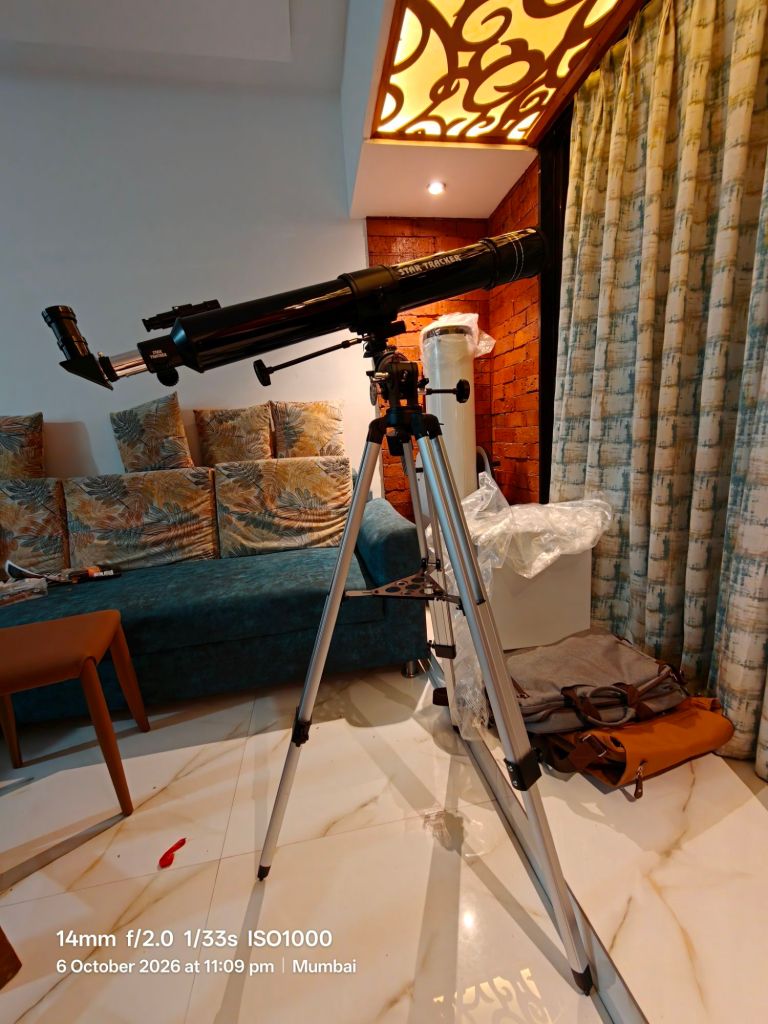
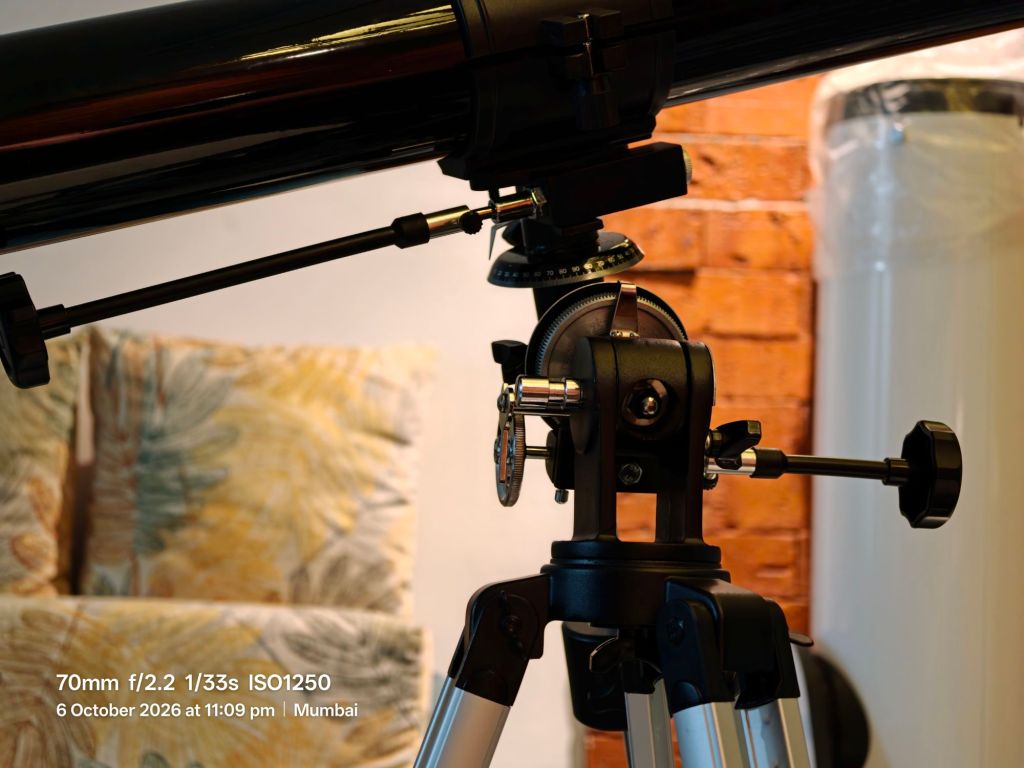
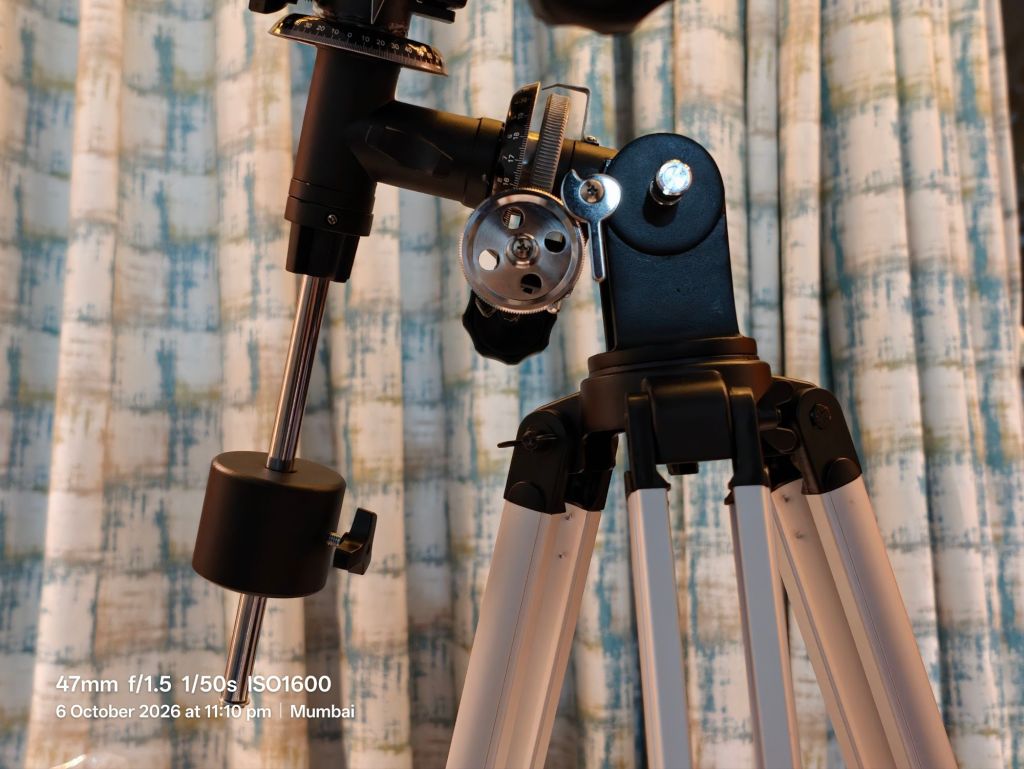
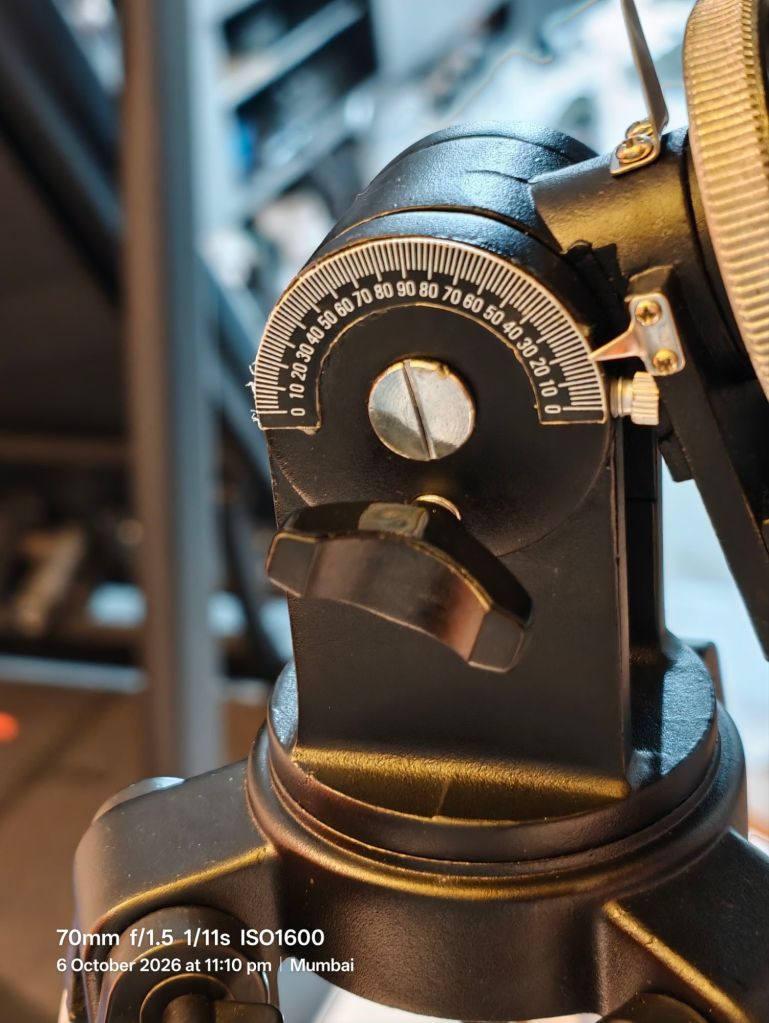
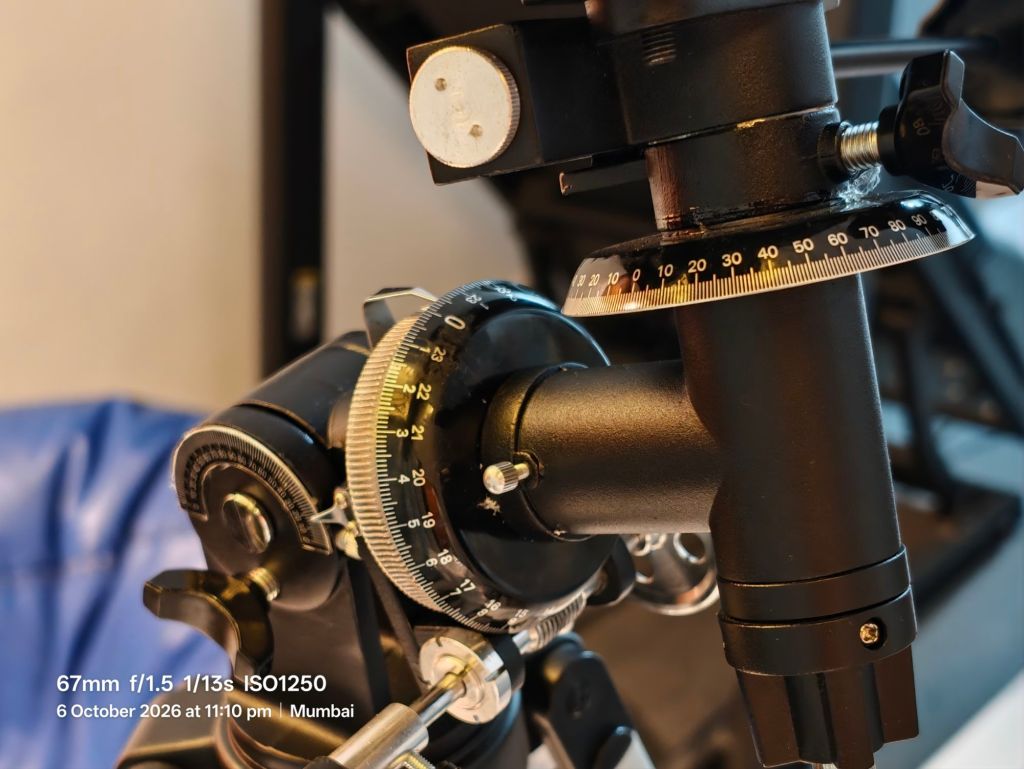
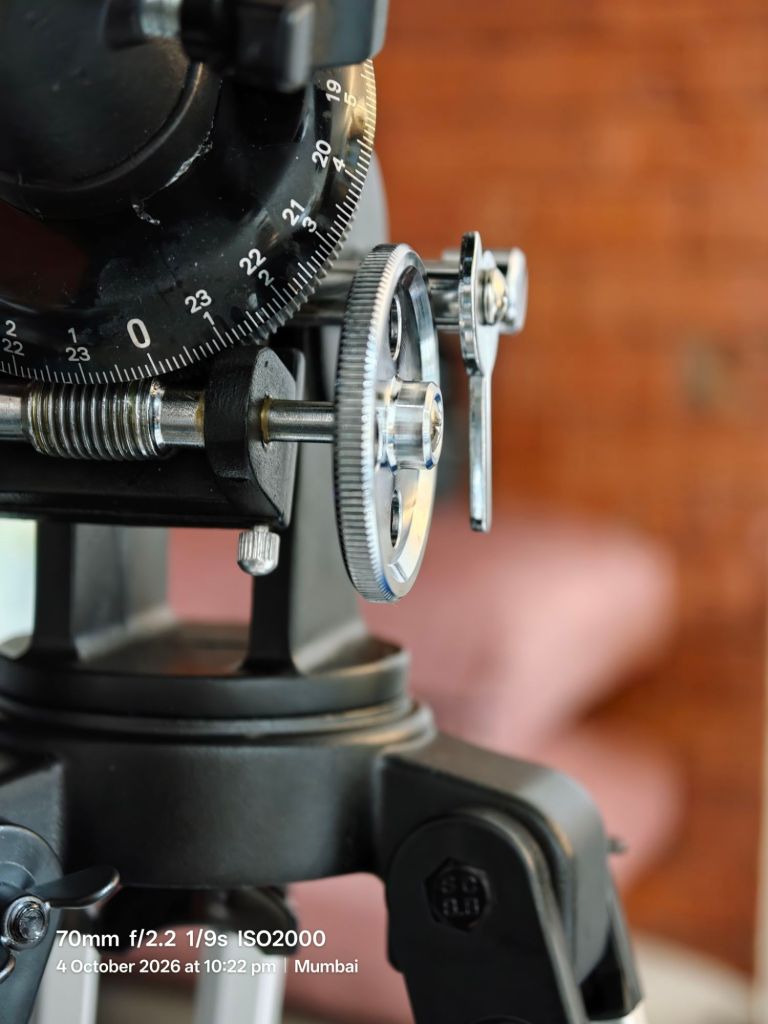
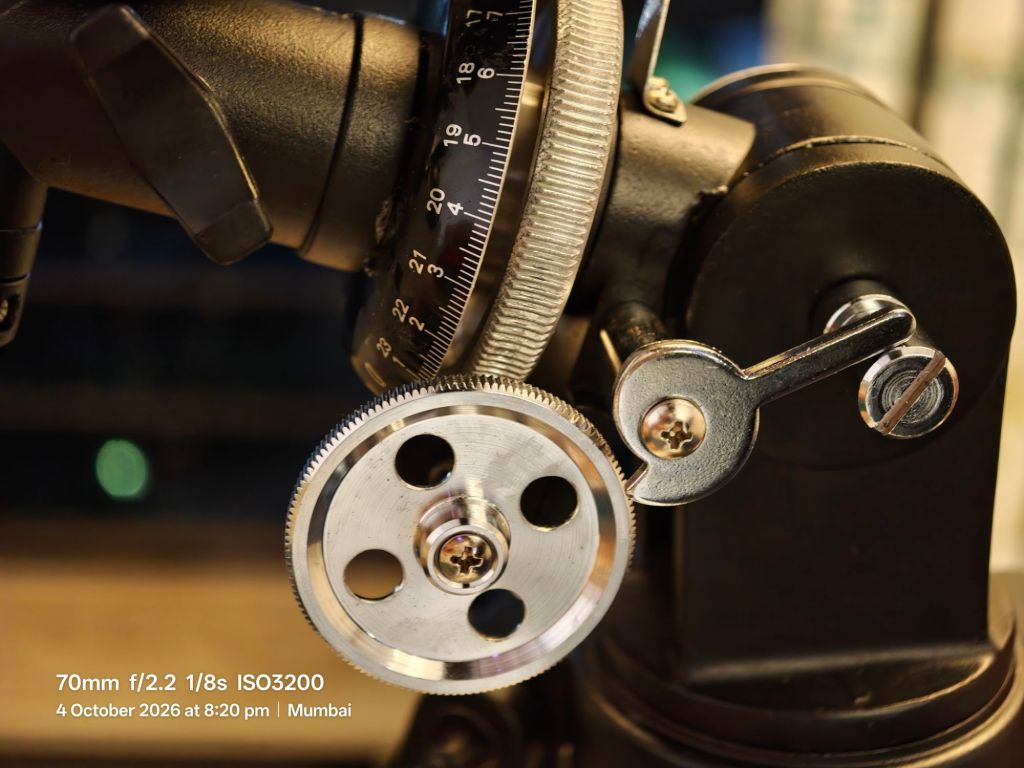
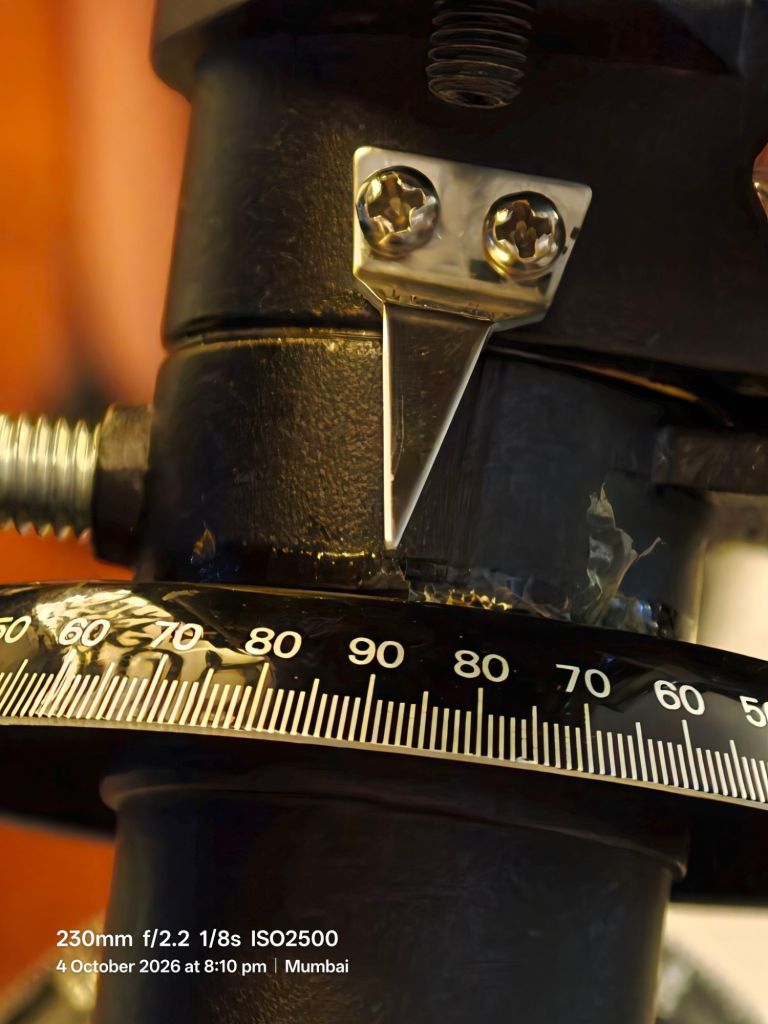
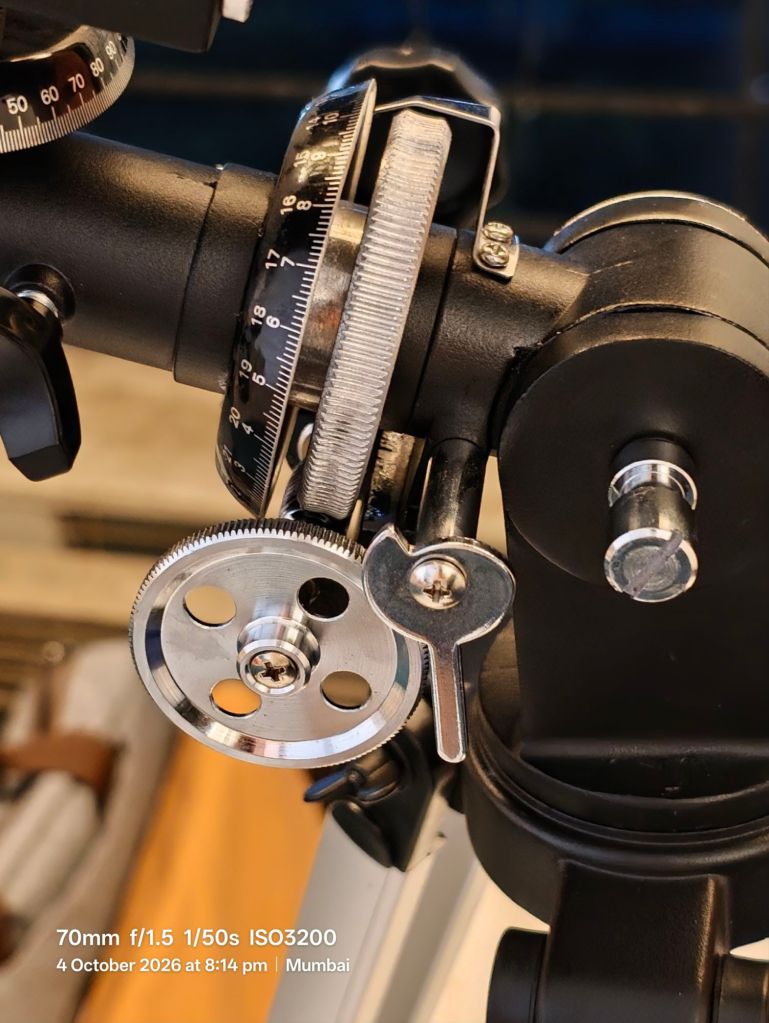
Along with the Astro Hopper website, as guided by Darsheel Patel, owner of Tejraj and Co and this wonderful EQ mount , hopefully many nights of finding many deep sky objects and tracking them effortlessly for long periods of tracking.


Congrats on the upgrade! Though, honestly, looking at those photos of the German Equatorial Mount makes my brain hurt just a little… it looks like a plumbing project crossed with a vintage clock.
Respect to anyone who has the patience to balance all those counterweights 🙂
LikeLike
¡Increíble! Las telescopios refractores son un paso adelante en la exploración del cosmos. Gracias por compartir esta información.
LikeLike